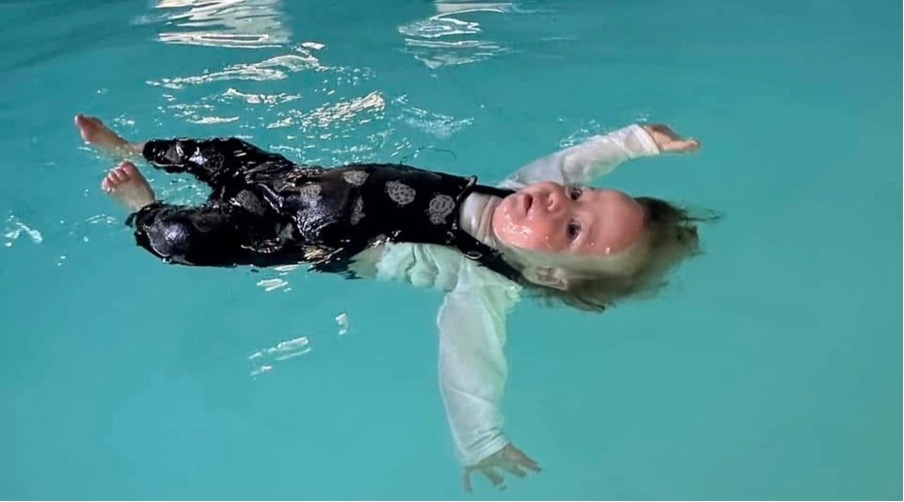
Swimming can support many areas of child development, especially when children participate regularly in age-appropriate lessons and play. It is more than learning a lifesaving skill – it provides opportunities for physical, cognitive, sensory, social and emotional development. Swimming gives children opportunities to move, think, remember, problem solve, communicate and build confidence – all while developing an important life skill.
Physical development
Swimming is a wonderful activity for supporting a child’s physical development because it engages almost the entire body while allowing children to move in a low-impact environment.
- Builds muscle strength:
Swimming works the arms, legs, back and core, helping children develop overall muscular strength.
- Improves coordination:
Children learn to coordinate their arms, legs, breathing and body movements together.
- Develops balance:
Moving and maintaining different positions in the water helps children develop body balance and control.
- Improves flexibility:
Swimming involves a wide range of movements that encourage flexibility in the shoulders, hips, legs and spine.
- Develops gross motor skills:
Kicking, reaching, pushing, pulling, floating and changing body positions strengthen large-muscle movements.
- Improves cardiovascular fitness:
Regular swimming helps strengthen the heart and lungs and improves endurance.
- Develops body awareness:
Children learn how their bodies move through the water and how to control their movements.
- Supports spatial awareness:
Swimming teaches children to understand their position in relation to the pool, the water surface and other people.
- Encourages stamina and endurance:
Repeated swimming activities gradually help children swim for longer periods without becoming as tired.
- Promotes healthy physical activity:
Swimming can help children develop an enjoyable habit of being active from an early age.

Brain development
Swimming is not only a physical activity – it also provides a rich environment for brain development. Children need to move their bodies, process sensory information, remember instructions and make decisions while swimming.
- Strengthens brain-body connections:
Coordinating the arms, legs, breathing and body position requires different areas of the brain to work together.
- Improves concentration and attention:
Following swimming instructions and completing activities encourages children to focus on a task.
- Develops problem-solving skills:
Children learn how to adjust their movements, find ways to float, reach an object or move through the water.
- Supports memory:
Repeating swimming skills helps children remember sequences, instructions and movement patterns.
- Develops balance and coordination:
The brain continuously processes information from the body to help maintain balance and control movement.
- Provides rich sensory experiences:
Water provides stimulation through touch, movement, pressure and changes in body position, giving the brain lots of information to process.
- Supports learning through repetition:
Repeated practice helps children become more familiar with movements and gradually perform skills more automatically.
- Builds confidence and resilience:
Learning a new swimming skill, making mistakes and trying again can encourage persistence and confidence.
- Encourages executive-function skills:
Swimming activities can involve remembering instructions, controlling movements, adapting to changes and completing a sequence of actions.
Concentration and attention
Regular, age-appropriate swimming activities can provide many valuable opportunities for children to practise concentration and attention because they need to listen, focus, process information, remember instructions and coordinate their movements at the same time. During swimming lessons, children need to listen to instructions, watch demonstrations and remember what to do next. This can help develop their ability to focus, follow instructions and stay engaged with a task.
- Encourages focused attention:
Children need to concentrate on their instructor and pay attention to what they are being asked to do.
- Develops listening skills:
Following verbal instructions helps children practise listening carefully and responding appropriately.
- Requires multitasking:
A child may need to think about kicking, moving their arms, breathing and maintaining body position simultaneously.
- Strengthens attention through repetition:
Repeating swimming skills helps children stay focused on a specific movement until they become more familiar with it.
- Encourages following sequences:
Activities such as kick, kick, breathe and glide require children to remember and complete movements in the correct order.
- Provides sensory stimulation:
The feel and resistance of the water, movement and changes in body position provide information that children must process while swimming.
- Builds sustained attention:
As children practise and gradually learn more complex skills, they have opportunities to maintain their focus for longer periods.
- Provides clear goals:
Learning to float, kick, swim a distance or master a new skill gives children a specific target to concentrate on.
- Makes learning engaging:
Fun games and activities in the water can help children remain interested and actively involved in the learning process.
Memory and learning
Repeating swimming skills – such as kicking, floating, breathing and different strokes – gives children repeated opportunities to remember and practise movement patterns. Repetition helps reinforce learning and build confidence. Each swimming lesson involves listening, remembering instructions, repeating skills and applying what has been learned.
- Strengthens learning through repetition:
Repeating skills such as kicking, floating, breathing and arm movements helps children remember movement patterns.
- Builds motor memory:
With regular practice, movements can become more familiar and automatic, allowing children to perform skills with less conscious effort.
- Develops working memory:
Children often need to remember several instructions at once, such as kick, reach, breathe and glide.
- Supports learning sequences:
Swimming teaches children to remember the order in which movements should be performed.
- Encourages attention:
Children need to listen and concentrate before they can remember and apply a new swimming skill.
- Promotes problem-solving:
Children learn to adjust their movements when something doesn’t work, helping them connect experience with learning.
- Uses multiple senses:
Feeling the water, seeing demonstrations, hearing instructions and physically performing a movement gives children several ways to experience and remember a skill.
- Builds on previous learning:
Swimming skills are often progressive. Children use previously learned skills as a foundation for more advanced ones.
- Encourage persistence:
Remembering a skill that was difficult at first and eventually mastering it can reinforce the connection between practice and achievement.
Sensory development
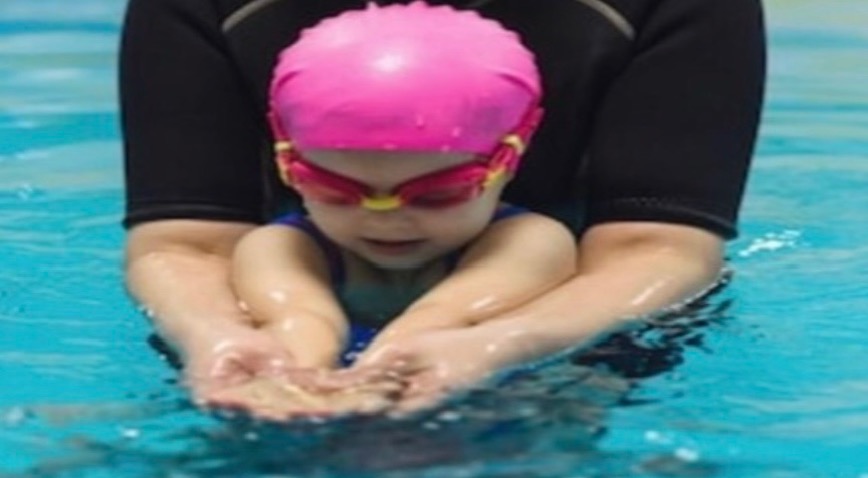
Swimming provides a rich sensory environment because children experience water through touch, pressure, temperature, sound, movement, resistance and changes in body position. Activities such as floating, rolling and jumping can provide valuable sensory and movement experiences.
- Tactile development:
Water provides continuous touch and pressure across the skin, helping children become familiar with different sensations.
- Vestibular development:
Moving through the water, floating, turning, rolling and changing positions stimulate the vestibular system, which contributes to balance and spatial orientation.
- Proprioception and body awareness:
Children learn where their arms, legs and body are positioned as they kick, float and move through the water.
- Visual processing:
Following an instructor, looking for objects underwater and judging distances encourage children to process visual information.
- Auditory awareness:
Children practise listening to instructions and responding to sounds and verbal cues, sometimes in an environment where sounds behave differently because of the water.
- Breathing awareness:
Learning to control breathing and coordinate it with movement helps children become more aware of their bodies.
- Temperature awareness:
Experiencing the temperature of the water provides another sensory input that children learn to recognise and respond to.
- Sensory integration:
Swimming requires the brain to process information from several senses at the same time and use that information to coordinate movement.
Confidence and Independence
Swimming can support confidence and independence in children by giving them opportunities to learn skills, overcome challenges and experience success in the water.
Learning a new swimming skill can give children a sense of achievement. As they progress from needing assistance to performing skills independently, they can develop confidence, perseverance and resilience.
Confidence
- Achieving new skills:
Learning to float, kick, breathe and swim gives children a sense of accomplishment.
- Overcoming fear:
Gradually becoming comfortable in the water can help children manage uncertainty and develop courage.
- Seeing progress:
Children can notice their own improvement, which builds a positive belief in their abilities.
- Building resilience:
When a skill is difficult, children learn to keep trying rather than giving up.
- Encouraging positive self-esteem:
Successfully completing swimming activities can make children feel capable and proud.
- Providing a safe challenge:
Swimming allows children to try new things within a structured and supervised environment.
Independence
- Doing things for themselves:
Children gradually learn to enter the water, move through it, float and practise skills with less assistance.
- Making decisions:
They learn to judge their movements, position their bodies and respond to different situations in the water.
- Developing self-reliance:
As their swimming abilities improve, they become less dependent on adults for every movement or task.
- Learning water-safety skills:
Understanding how to behave around water and what to do if they experience difficulty can support greater independence.
- Taking responsibility:
Children can learn to listen to instructions, follow pool rules and take responsibility for their equipment.
- Building perseverance:
Repeated practice teaches children that independence develops through patience, effort and practice.
Social and emotional development
Swimming can support social and emotional development by giving children opportunities to interact with others, manage emotions, build confidence and develop important social skills.
Swimming lessons can teach children to take turns, cooperate, communicate with instructors and interact with other children. They also learn to manage challenges and emotions in a structured environment.
Social development
- Cooperation:
Swimming lessons teach children to listen to instructors, follow directions and work alongside other children.
- Communication:
Children learn to communicate with instructors and peers, ask for help and express their needs.
- Taking turns:
Group lessons provide opportunities to practise waiting, sharing space and respecting other swimmers.
- Teamwork:
Games and group activities encourage children to participate together and support one another.
- Building friendships:
Regular swimming sessions allow children to interact repeatedly with their peers and develop friendships.
- Respect for others:
Children learn to respect personal space, pool rules and the abilities of other swimmers.
Emotional development
- Confidence:
Mastering new swimming skills gives children a sense of achievement and helps them believe in their abilities.
- Managing fear:
Becoming comfortable in the water can help children learn to cope with nervousness and unfamiliar situations.
- Resilience:
Swimming involves practising skills repeatedly. Children learn that mistakes and difficulties are part of learning.
- Emotional regulation:
Swimming requires children to listen, pause, focus and control their movements, which can support self-regulation.
- Independence:
As children become more capable in the water, they can develop a stronger sense of confidence and self-reliance.
- Pride and achievement:
Reaching swimming milestones can create positive feelings of accomplishment and motivation.

Executive function
Swimming can support the development of executive function skills – the mental skills children use to focus, remember instructions, control impulses, adapt to changes and manage their actions. Swimming can involve remembering instructions, controlling impulses, switching between activities and planning movements. These are components of executive function, which supports children’s ability to manage attention and behaviour.
- Attention and focus:
Children need to listen to the instructor, watch demonstrations and concentrate on their movements.
- Working memory:
Swimmers have to remember sequences such as kick-breathe-reach-pull and apply them while swimming.
- Self-control:
Children practise waiting their turn, following pool rules and controlling movements rather than acting impulsively.
- Planning and sequencing:
Swimming requires children to coordinate several actions in the correct order, such as breathing, kicking and arm movements.
- Cognitive flexibility:
Children learn to adjust their movements when an exercise changes or when a technique isn’t working.
- Problem-solving:
When a child struggles with a skill, they learn to try different movements or strategies to achieve the goal.
- Goal setting:
Working towards milestones, such as floating independently or swimming a certain distance, teaches children to work towards a goal.
- Persistence:
Repeated practice helps children develop the ability to stay with a challenging task instead of giving up.
- Emotional regulation:
Children learn to remain calm, manage frustration and regain focus when something doesn’t go as planned.
Water safety
Swimming supports water safety and independence by helping children develop practical skills, awareness and confidence around water. It is important to remember that swimming ability does not make a child drown proof, children still need close, active adult supervision around water. Perhaps most importantly, swimming education can teach children essential water-safety skills and help them become more comfortable and capable in aquatic environments.
- Water awareness:
Children learn to understand how their bodies behave in water and become familiar with different water environments.
- Floating and breathing:
Learning to float and control breathing can help children respond more effectively if they unexpectedly enter the water.
- Safe movement:
Children learn skills such as kicking, swimming, changing direction and reaching for the pool wall.
- Entry and exit skills:
Practising safe ways to enter and get out of the water can help children respond in an emergency.
- Following safety rules:
Swimming lessons reinforce important habits such as listening to instructions, not running around pools and waiting for permission to enter the water.
- Recognising limits:
Children learn that different water environments require different levels of caution and that they should not enter water without adult supervision.
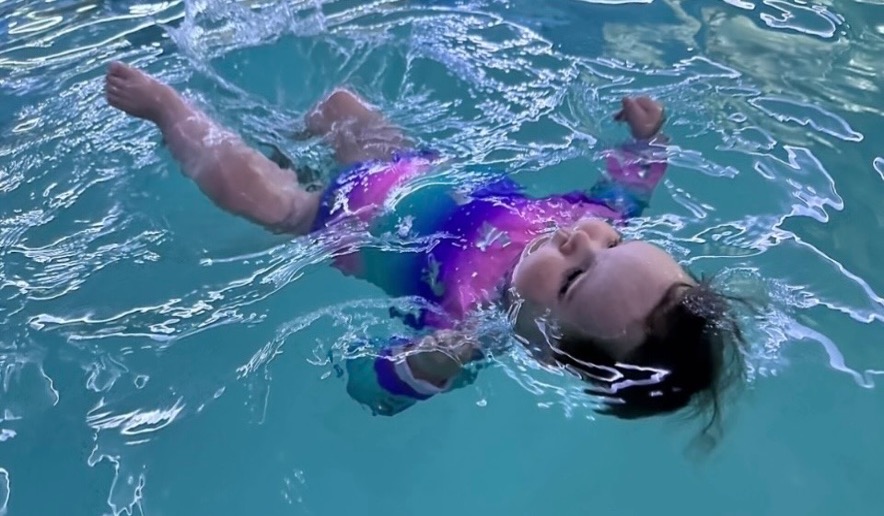
Swimming education gives children skills and knowledge that can improve their ability to respond to water-related situations, while also developing confidence and independence. However, swimming lessons are only one layer of water safety. Constant, close adult supervision, barriers around pools and appropriate safety practices remain essential.